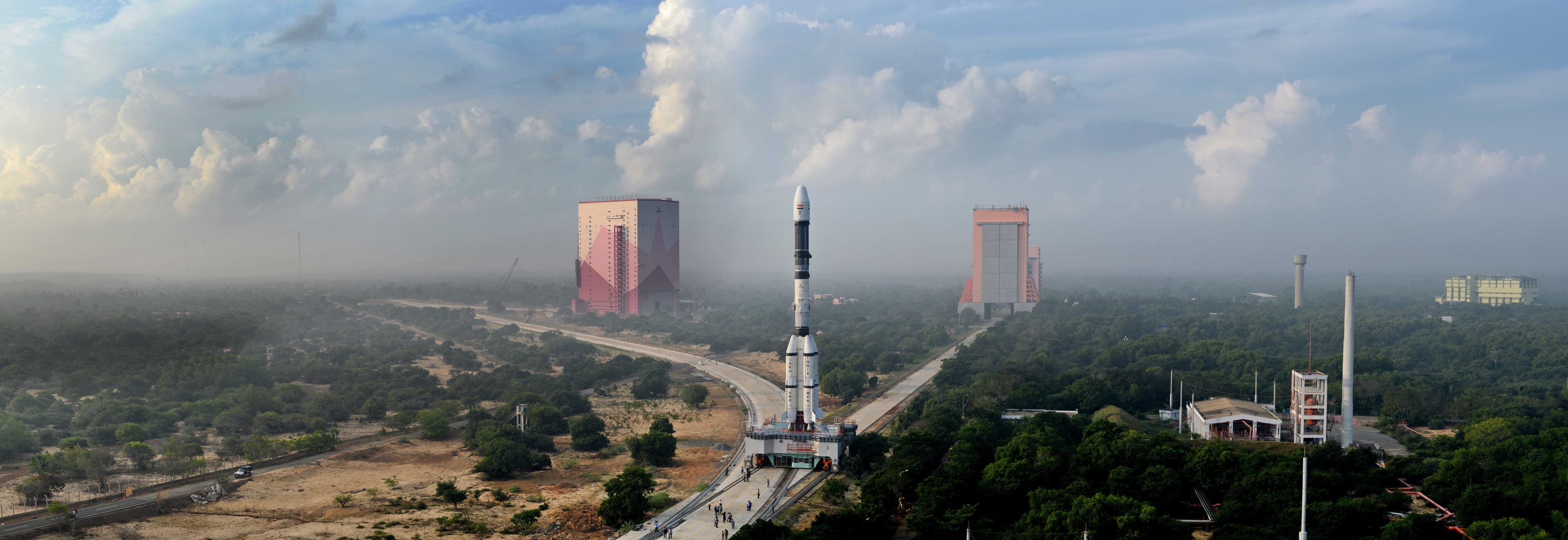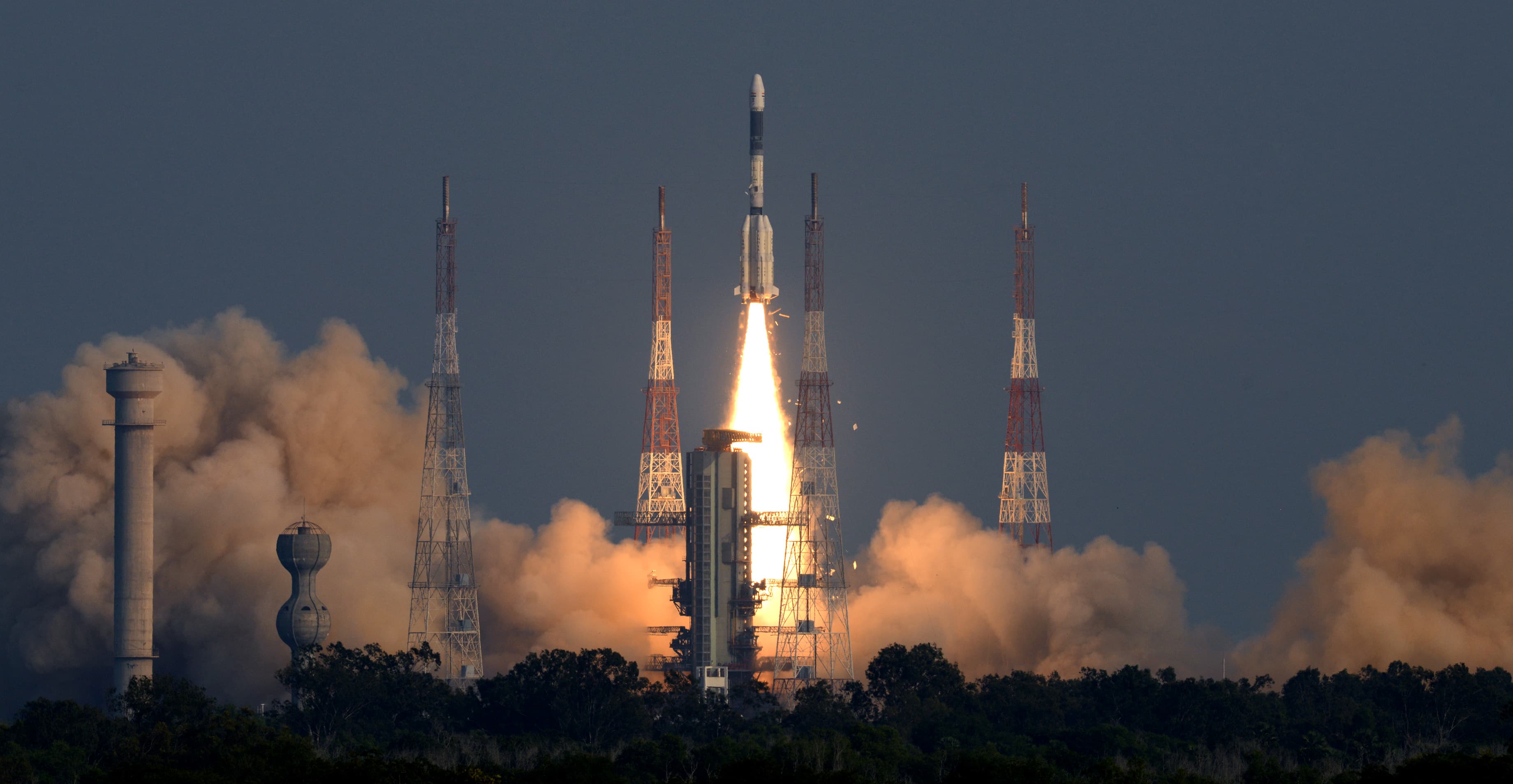
GSLV MK II
India's largest launcher
2500 kg
Geosynchronous Transfer Orbit (GTO)
5000 kg
Low Earth Orbit (LEO)
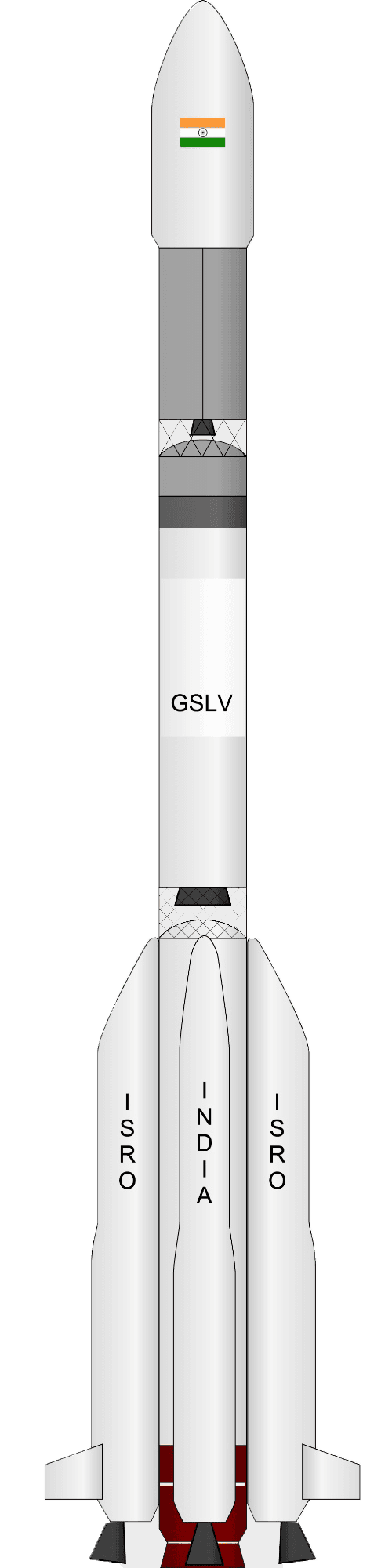
Vehicle Specifications
| Height | 49.13 m |
| Number of Stages | 3 |
| Lift Off Mass | 414.75 tonnes |
| First flight | April 18, 2001 |
About launcher
Geosynchronous Satellite Launch Vehicle Mark II (GSLV Mk II is the largest launch vehicle developed by India, which is currently in operation. This fourth generation launch vehicle is a three stage vehicle with four liquid strap-ons.
The indigenously developed cryogenic Upper Stage (CUS, which is flight proven, forms the third stage of GSLV Mk II. From January 2014, the vehicle has achieved four consecutive successes.
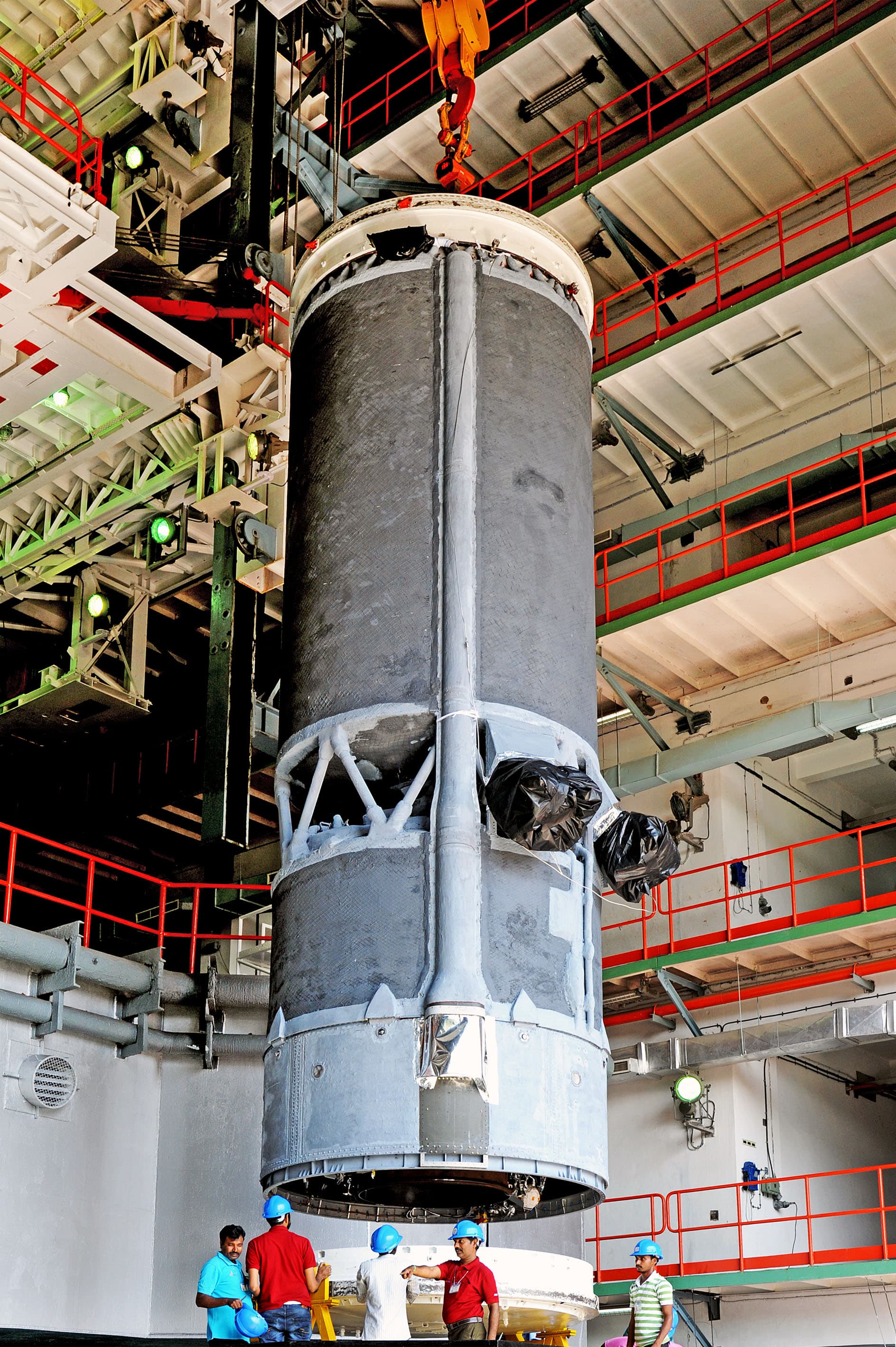
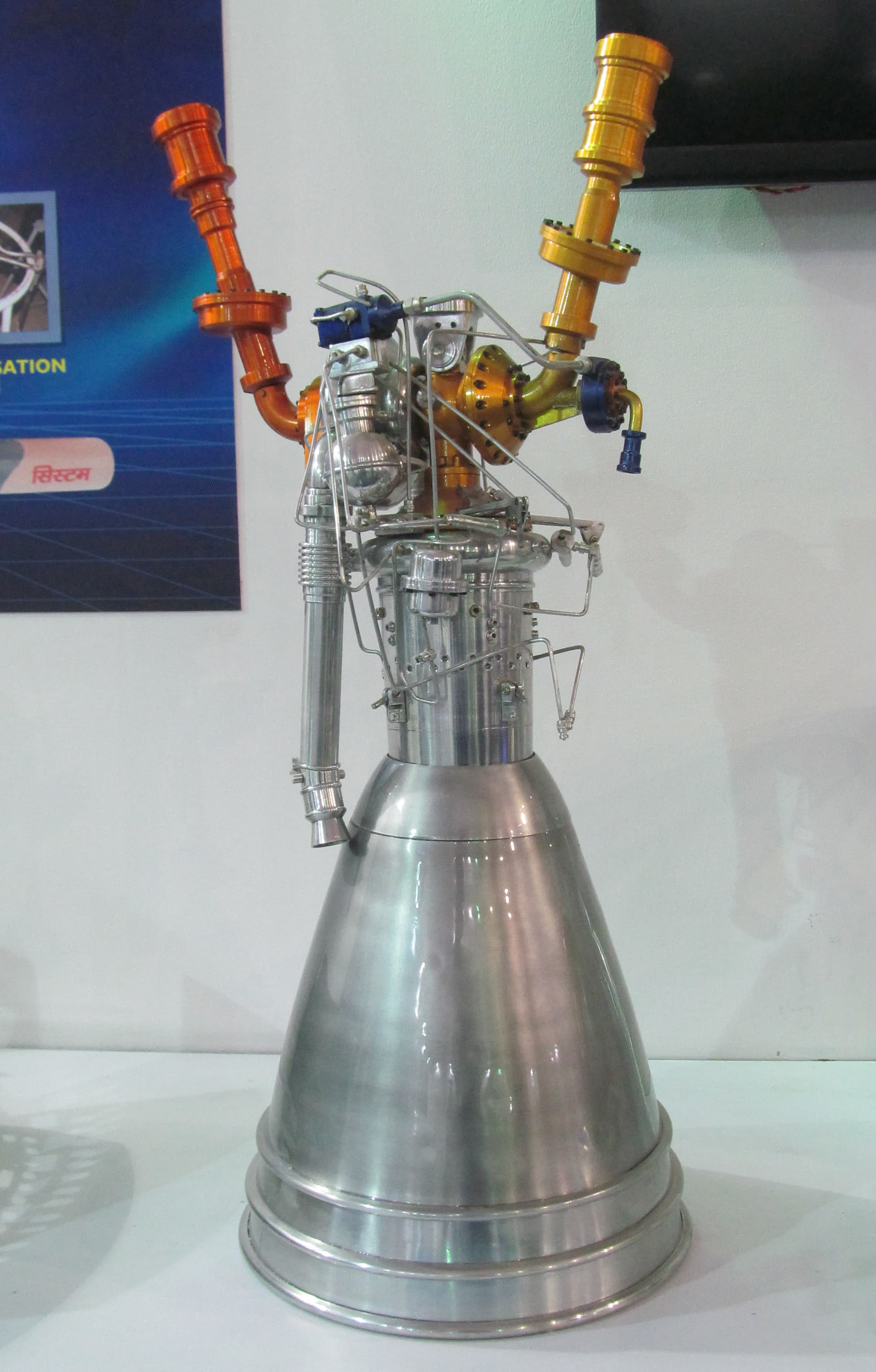
Third Stage: CUS
Developed under the Cryogenic Upper Stage Project (CUSP, the CE-7.5 is India's first cryogenic engine, developed by the Liquid Propulsion Systems Centre. CE-7.5 has a staged combustion operating cycle.
| Fuel | LOX + LH2 |
| Max thrust | 75 kN |
| Burn time | 720 sec |
Second Stage: GS2
One Vikas engine is used in the second stage of GSLV. The stage was derived from the PS2 of PSLV where the Vikas engine has proved its reliability.
| Engine | Vikas |
| Fuel | UDMH + N204 |
| Max thrust | 800 kN |
| Burn time | 150 sec |
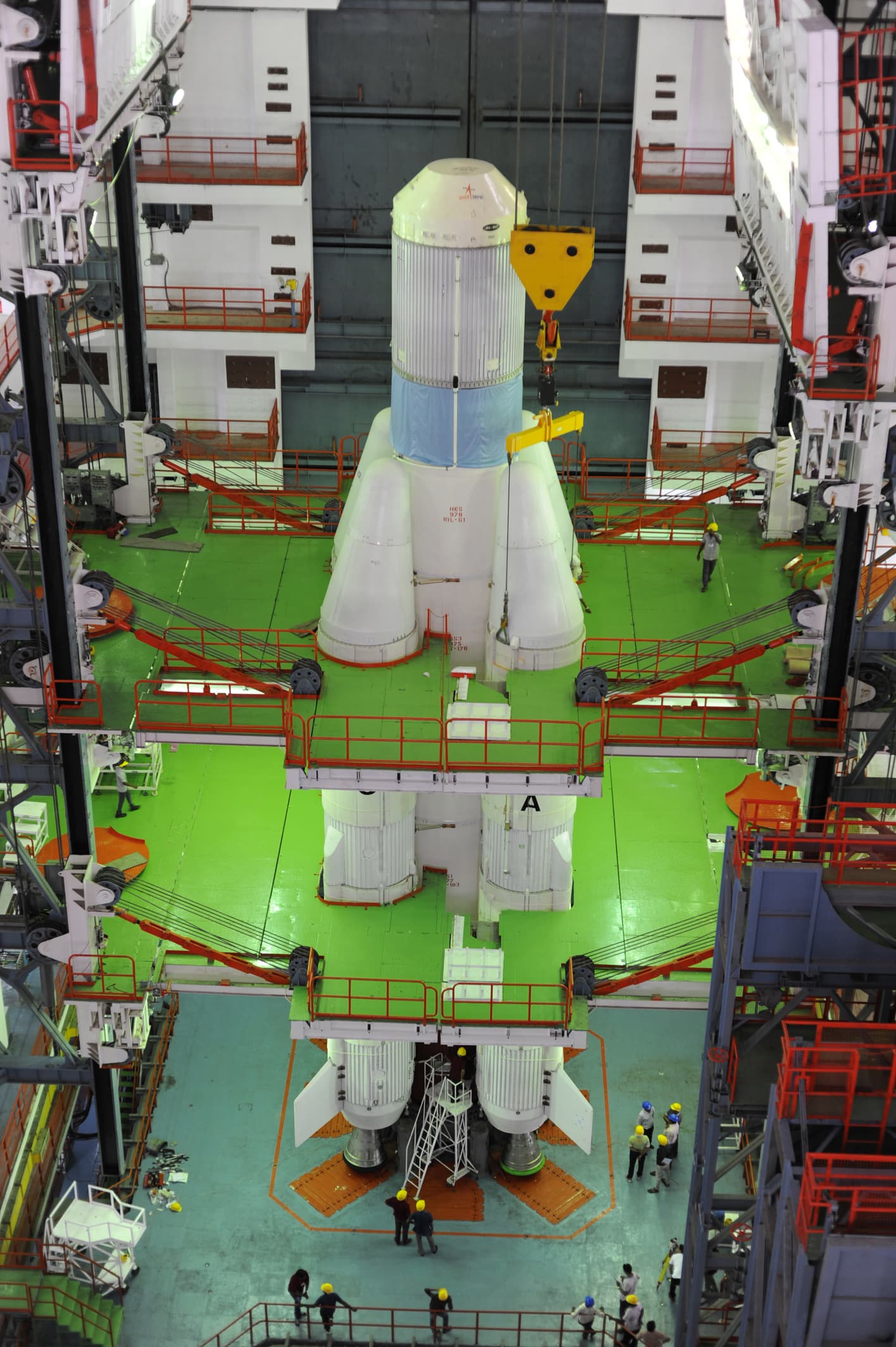
First Stage: GS1
The first stage of GSLV was also derived from the PSLV's PS1. The 138 tonne solid rocket motor is augmented by 4 liquid strap-ons.
| Engine | S139 |
| Fuel | HTPB |
| Max thrust | 4700 kN |
| Burn time | 100 sec |
Strap-on Motors
The four liquid engine strap-ons used in GSLV are heavier derivatives of PSLV's PS2, and use one Vikas engine each.
| Fuel | UDMH + N204 |
| Max thrust | 680 kN |
| Burn time | 160 sec |
GSLV-F11 / GSAT-7A LAUNCH
Launches till Date
| SN | Name | Launch Date | Launcher Type | Orbit Type | Payload | Remarks |
|---|---|---|---|---|---|---|
| 1 | GSLV-F11 / GSAT-7A Mission | Dec 19, 2018 | GSLV-MK-II | GSAT-7A |